JVHC ISSN 2575-1212 Single blind peer review 11 editors 7 countries
Editorial Board
The editors of the Journal of Veterinary Healthcare assess whether a manuscript falls within the journal's scope, whether it has been conducted and reported to a standard that supports its conclusions, and whether the evidence for animal welfare and research ethics is present. They select and weigh independent reviewers. The Editor-in-Chief takes the decision.
Editorial decisions are independent of article processing charges, membership, sponsorship and advertising. An editor with a competing interest does not handle the manuscript, and another editor without a conflict oversees the review. Positions, institutions and ORCID iDs below are the approved public values held in the central editor database.
| Review model | Single blind |
|---|---|
| Reviewers | At least two independent subject-matter experts |
| Decision | Editor-in-Chief |
| Conflicted editor | Must recuse; another editor oversees the review |
| Fees and membership | No bearing on the decision |
| Appointment | Vetted; there is no automatic registration |
| Board data source | Editor Review database |
Editor-in-Chief
Editorial direction · scope · final decision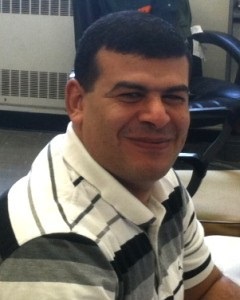
Editor-in-Chief
Mohammed A. Elmetwally
Department of Theriogenology, Faculty of Veterinary Medicine, Mansoura University
Egypt
Reproduction medicine and Biology, Molecular reproduction, Reproduction nutrition amino acids, Placenta, Fetus, Pregnancy
- Sets the journal's editorial direction and its scope boundary.
- Screens submissions and assigns them to an editor with relevant expertise.
- Approves reviewer selection and weighs the reports received.
- Takes the decision to accept, revise or decline.
- Manages conflicts of interest and orders recusal where independence is in doubt.
- Escalates suspected misconduct and authorizes corrections and retractions.
Editors must not handle their own submissions. Such manuscripts must be assigned to an independent editor with no relevant conflict of interest. The journal's editor guidelines set out how that independence is maintained.
Editorial Board
10 members · 10 of 11 with ORCID
Editorial Board
Adnan Yousaf
Production Manager , Sadiq Poultry Ltd, Rawalpindi
Pakistan
Poultry Management, Poultry Science, Broilers, Poultry Nutrition, Egg Production, Poultry, Animal Physiology, Feeding, Animal Production, Meat Quality
Editorial Board
Angela Maria Xavier Eloy
Researcher, Embrapa Goats and Sheep, Empresa Brasileira de Pesquisa Agropecuária
Brazil
Study of proteomics in the reproduction and diagnosis of diseases of goats & sheep, Proteases in the diagnosis and control of viral & bacterial diseases Animal Reproduction, Veterinary Medicine

Editorial Board
Betül Apaydın Yıldırım
Professor, Department of Veterinary Biochemistry, Faculty of Veterinary Medicine, Atatürk University
Turkey
Oxidative Stress. Vitamin, mineral, biochemical parameters. Antioxidant and oxidant.

Editorial Board
Burak Dik
Professor, Department of Pharmacology and Toxicology, Faculty of Veterinary Medicine, Selçuk University
Turkey
Pharmacology, wound healing, ethnopharmacology, anti-diabetic drugs, antioxidants.
Editorial Board
Caroline Rizzi
Professor, Course of Medicine, Universidade Federal da Fronteira Sul
Brazil
Biotechnology, Biochemistry, Immunology, Tuberculosis, Recombinant BCG, Recombinant vaccines

Editorial Board
Karima Gh. M. Mahmoud
Professor of Reproductive Genetics, Department of Animal Reproduction and Artificial Insemination, National Research Centre
Egypt

Editorial Board
Martin Svoboda
Ruminant and Swine Clinic, Faculty of Veterinary Medicine, University of Veterinary Sciences Brno
Czech Republic
Noninfectious diseases, metabolism of microelements and welfare in pigs

Editorial Board
Renita W. Marshall
Vice Chancellor for Academic and Student Services, Southern University Agricultural Research and Extension Center
United States
Animal Diseases Animal Parasitology

Editorial Board
Yanzhou Yang
Key Laboratory of Fertility Preservation and Maintenance, Ministry of Education, Ningxia Medical University
China
Mammalian ovarian follicle development, Apoptosis & Theriogenology Cell signaling pathways in the regulation of ovarian cell survival, apoptosis & related reproductive pathology, especially in Unfolded Protein Response and Autophagy pathways in the regulation of ovarian follicle development and atresia. Stem cell ovarian tissue sciences & engineering.
Editorial Board
Gabriela Noronha de Toledo
Universidade Federal de Campina Grande, Patos, Paraíba
Brazil
Immunohistochemistry Veterinary Oncology Veterinary Histology Histopathology Veterinary Pathology Immunohistochemical Staining Veterinary Science Small Animals Veterinary Immunology
Each name links to that editor's profile. Each available ORCID iD links to the corresponding ORCID URL.
Recorded research interests
From approved public board fieldsThe subject terms below come from the research-interest fields of the public board records. They summarize stored information and do not independently verify expertise or count published articles.
| Subject area | Editors | Names |
|---|---|---|
| Reproduction medicine and Biology | 1 | Elmetwally |
| Molecular reproduction | 1 | Elmetwally |
| Reproduction nutrition amino acids | 1 | Elmetwally |
| Placenta | 1 | Elmetwally |
| Fetus | 1 | Elmetwally |
| Pregnancy | 1 | Elmetwally |
| Poultry Management | 1 | Yousaf |
| Poultry Science | 1 | Yousaf |
| Broilers | 1 | Yousaf |
| Poultry Nutrition | 1 | Yousaf |
| Egg Production | 1 | Yousaf |
| Poultry | 1 | Yousaf |
| Animal Physiology | 1 | Yousaf |
| Feeding | 1 | Yousaf |
| Animal Production | 1 | Yousaf |
| Meat Quality | 1 | Yousaf |
| Study of proteomics in the reproduction and diagnosis of diseases of goats & sheep | 1 | Eloy |
| Proteases in the diagnosis and control of viral & bacterial diseases Animal Reproduction | 1 | Eloy |
| Veterinary Medicine | 1 | Eloy |
| Oxidative Stress. Vitamin | 1 | Yıldırım |
| mineral | 1 | Yıldırım |
| biochemical parameters. Antioxidant and oxidant. | 1 | Yıldırım |
| Pharmacology | 1 | Dik |
| wound healing | 1 | Dik |
| ethnopharmacology | 1 | Dik |
| anti-diabetic drugs | 1 | Dik |
| antioxidants. | 1 | Dik |
| Biotechnology | 1 | Rizzi |
| Biochemistry | 1 | Rizzi |
| Immunology | 1 | Rizzi |
| Tuberculosis | 1 | Rizzi |
| Recombinant BCG | 1 | Rizzi |
| Recombinant vaccines | 1 | Rizzi |
| Noninfectious diseases | 1 | Svoboda |
| metabolism of microelements and welfare in pigs | 1 | Svoboda |
| Animal Diseases Animal Parasitology | 1 | Marshall |
| Mammalian ovarian follicle development | 1 | Yang |
| Apoptosis & Theriogenology Cell signaling pathways in the regulation of ovarian cell survival | 1 | Yang |
| apoptosis & related reproductive pathology | 1 | Yang |
| especially in Unfolded Protein Response and Autophagy pathways in the regulation of ovarian follicle development and atresia. Stem cell ovarian tissue sciences & engineering. | 1 | Yang |
| Immunohistochemistry Veterinary Oncology Veterinary Histology Histopathology Veterinary Pathology Immunohistochemical Staining Veterinary Science Small Animals Veterinary Immunology | 1 | Toledo |
Where a manuscript needs expertise the board does not hold, the handling editor invites external specialist reviewers. Reviewer selection is not limited to board members, and a submission is declined rather than assessed by someone unqualified to judge it.
How editorial oversight works
Stage 1
Editorial screening
Every submission is screened for scope fit, ethical documentation, reporting quality and basic methodological completeness, and checked for plagiarism and redundant publication.
Stage 2
Assignment
A manuscript that passes screening is assigned to an editor with relevant veterinary expertise. An editor with a conflict does not handle it.
Stage 3
Independent review
Manuscripts that proceed to external peer review are normally evaluated by at least two independent subject-matter experts. Review is single blind: reviewer identities are not disclosed to authors.
Stage 4
Decision
The Editor-in-Chief weighs the reports and decides. Recommendations do not replace editorial judgment. Authors may appeal, and an appeal is reviewed by a senior editor.
Manuscripts are assessed for scope, scholarly quality, methodological rigor, ethical compliance, and research integrity.
Governance and conflicts of interest
Summary only — policies govern- Mandatory recusal. An editor must not handle their own submission, work by close collaborators, or a manuscript affected by a financial, professional or personal interest.
- Independent handling. Another editor without a conflict oversees the usual review, including reviewer selection and the decision.
- Confidentiality. Manuscripts, reviewer identities, reports and correspondence are confidential and must not be shared or reused beyond the editorial task.
- Editorial independence. Fees, waivers, membership, sponsorship, advertising and service as an editor or reviewer have no bearing on any decision.
- Disclosure. Authors, editors and reviewers disclose interests that could reasonably be perceived to influence the work or its assessment.
- AI and external systems. Reviewers must obtain journal permission before using AI to assist with a review. Any permitted use must be disclosed, and confidential manuscript content must not be uploaded where confidentiality cannot be assured.
- Appeals and complaints. A procedural complaint is assessed separately from disagreement with scientific judgment, and the decision record is preserved.
- Suspected misconduct. The decision is paused and the concern referred through the journal's integrity process.
- The published record. Corrections, expressions of concern and retractions are issued when the record requires them, and every notice remains linked to the article.
- Appointment. Applications are reviewed against the journal's stated identity, affiliation, subject and curriculum-vitae requirements; registration is not automatic.
These are summaries. The editorial policies and the guidelines for editors are the governing documents.
Animal ethics and research integrity
JVHC publishes work on owned animals, farms, wildlife, pathogens and biological materials. Before a manuscript reaches review, the handling editor establishes that the evidence below is present and adequate.
- Ethics approval from the responsible institutional or national body, named and numbered.
- Compliance with the welfare regulations of the country where the work was done.
- Owner or custodian consent for client-owned animals, and for any identifiable animal, farm or case detail.
- Humane endpoints, welfare monitoring and the handling of animals removed from a study.
- Permits for wildlife, protected species, field sites and farm access.
- Biosafety and biosecurity for work with pathogens, and the zoonotic risk to handlers.
- Justification for antimicrobial use, dose and withdrawal periods where treatment was given.
- A data-availability statement on every empirical research manuscript.
- Unaltered figures: no obscuring, removing or inventing image content.
- Statistical and reporting quality appropriate to the study design, with the relevant reporting checklist.
- Declared conflicts of interest and declared funding.
Requirements are set out in full in the editorial policies and the instructions for authors.
Submit to a board that can read your work
If your manuscript sits within the subject areas above, the editors listed on this page are the people who will assess it.
Questions about editorial process, appointments or a conflict of interest go to the editorial office at [email protected].